AnGen for clinicians
Therapy, lifestyle and clinical monitoring
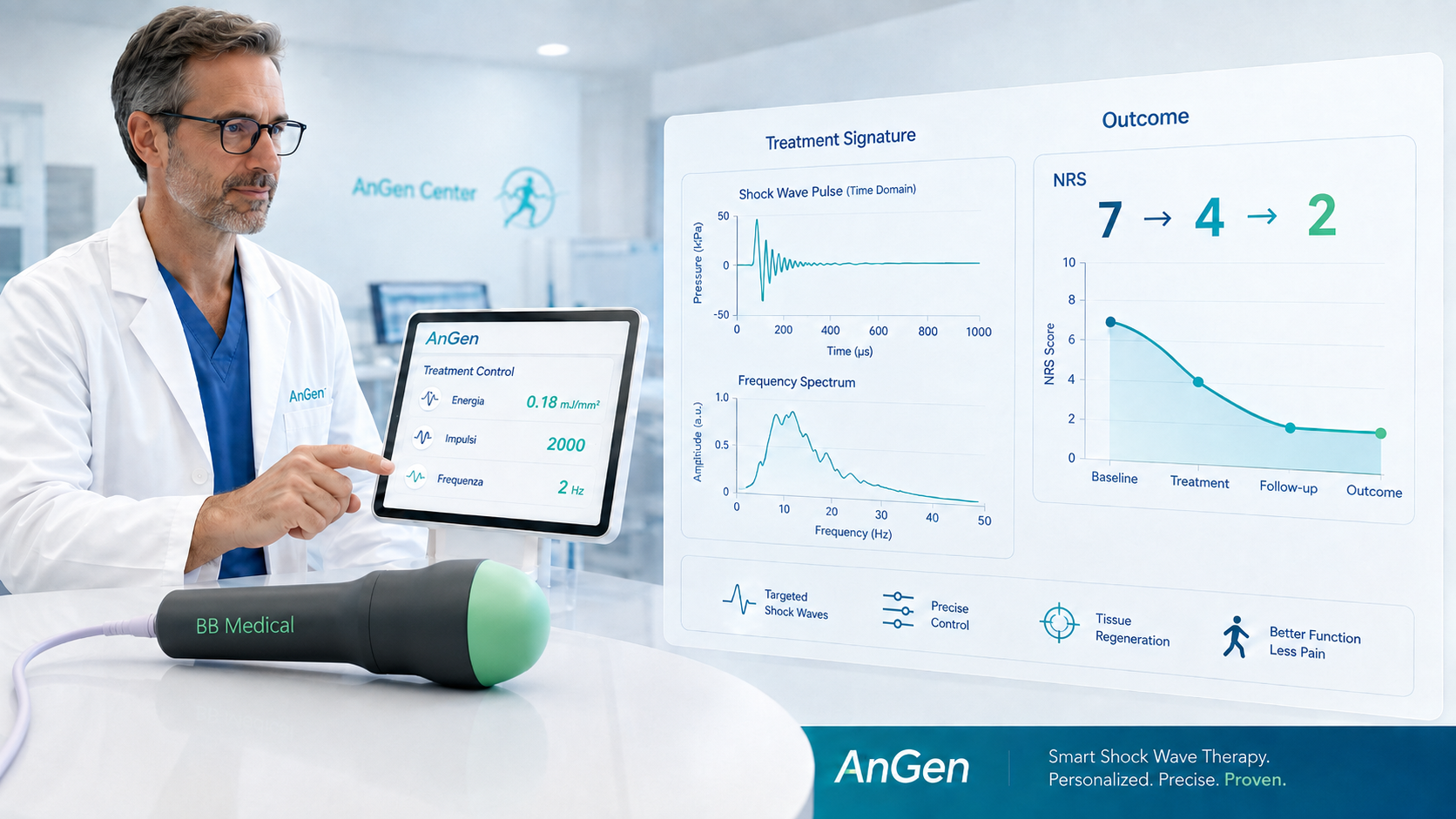
AnGen combines electrohydraulic ESWT with a care pathway including nutrition, physical exercise and monitoring of parameters relevant to the specific clinical indication.
The platform collects and organises data over time from treatment and diagnostic or monitoring technologies, including glucose monitoring, lipid profile, thermography of skin lesions and assessment of nocturnal erectile function.
This provides the clinician with a longitudinal view of the patient, from baseline and treatment through follow-up and outcomes.
1. Mechanism of action: from mechanical stimulation to biological response
The biological mechanism of shock wave therapy is not yet completely understood. Current evidence suggests that mechanical stimulation can be converted into biological signals through different mechanotransduction pathways, affecting cellular, vascular and neural components of the target tissue.
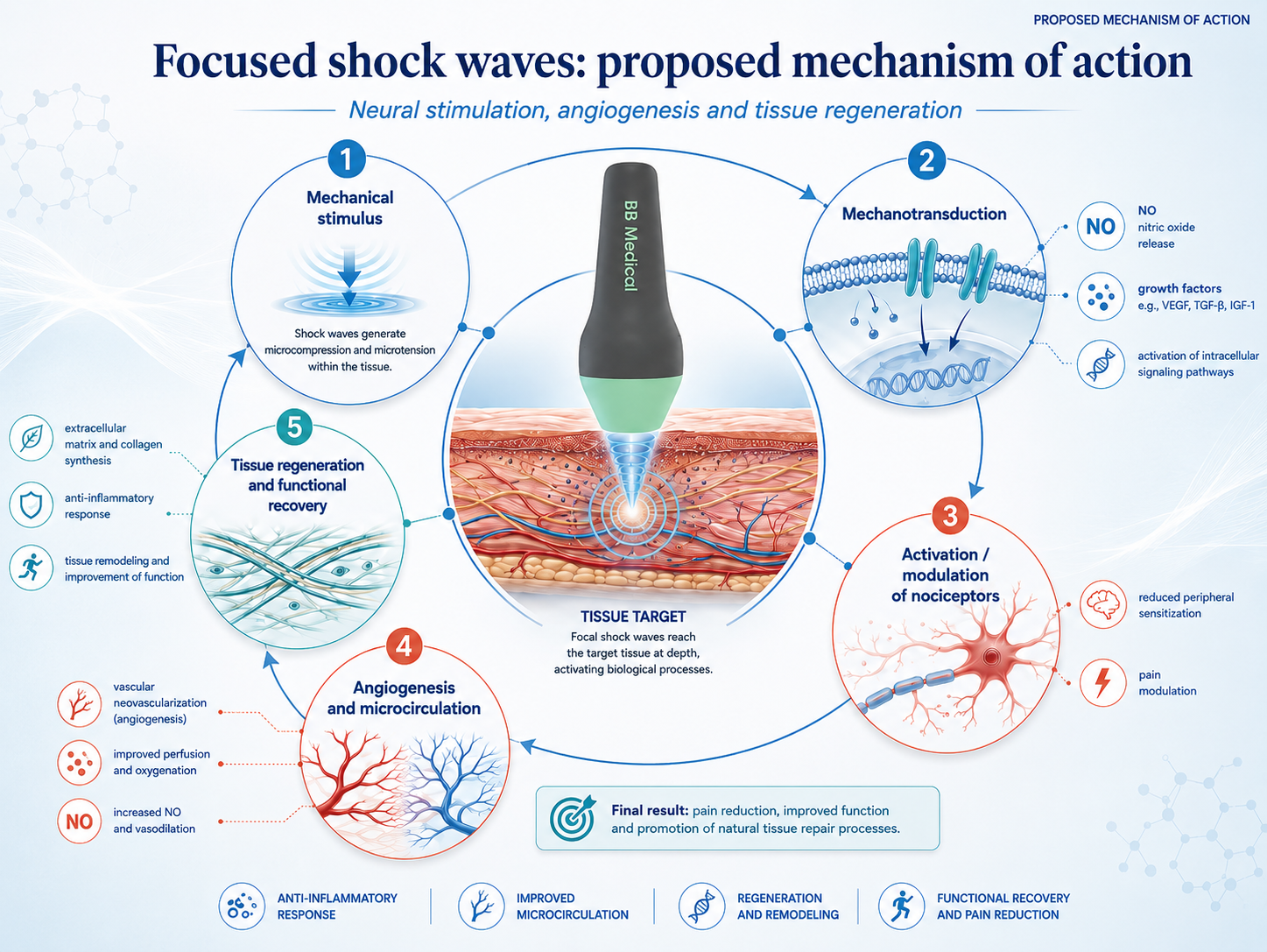
Mechanical stimulus
The focused impulse transfers energy to the target tissue, generating deformation, pressure gradients and local mechanical stresses.
Mechanotransduction
Cells and mechanosensitive structures may convert the physical stimulus into intracellular signalling and the release of biological mediators.
Tissue response
Reported effects include modulation of inflammation, vasodilation, neoangiogenesis and activation of tissue repair and trophic processes.
Neuro-cellular network
Nociceptors, Schwann cells and connective-tissue cells may participate in an interconnected signalling network mediated by chemical and neuro-cellular signals.
Mechanism under investigation. Different biological pathways may act simultaneously and their relative hierarchy has not yet been fully established. The diagram therefore represents an interpretative model based on currently available evidence.
If tissue responds to mechanical stimulation, the characteristics of the impulse may matter.
Intensity, stimulation volume, rise time and frequency content describe different characteristics of the impulse and its interaction with tissue. Their relationship with biological response remains an active field of research.
2. Proprietary electrohydraulic technology: from therapeutic dose to the AnGen Treatment Signature
AnGen uses a focused electrohydraulic ESWT technology developed by BB Medical and designed to control, characterise and systematically record the main parameters of the therapy.
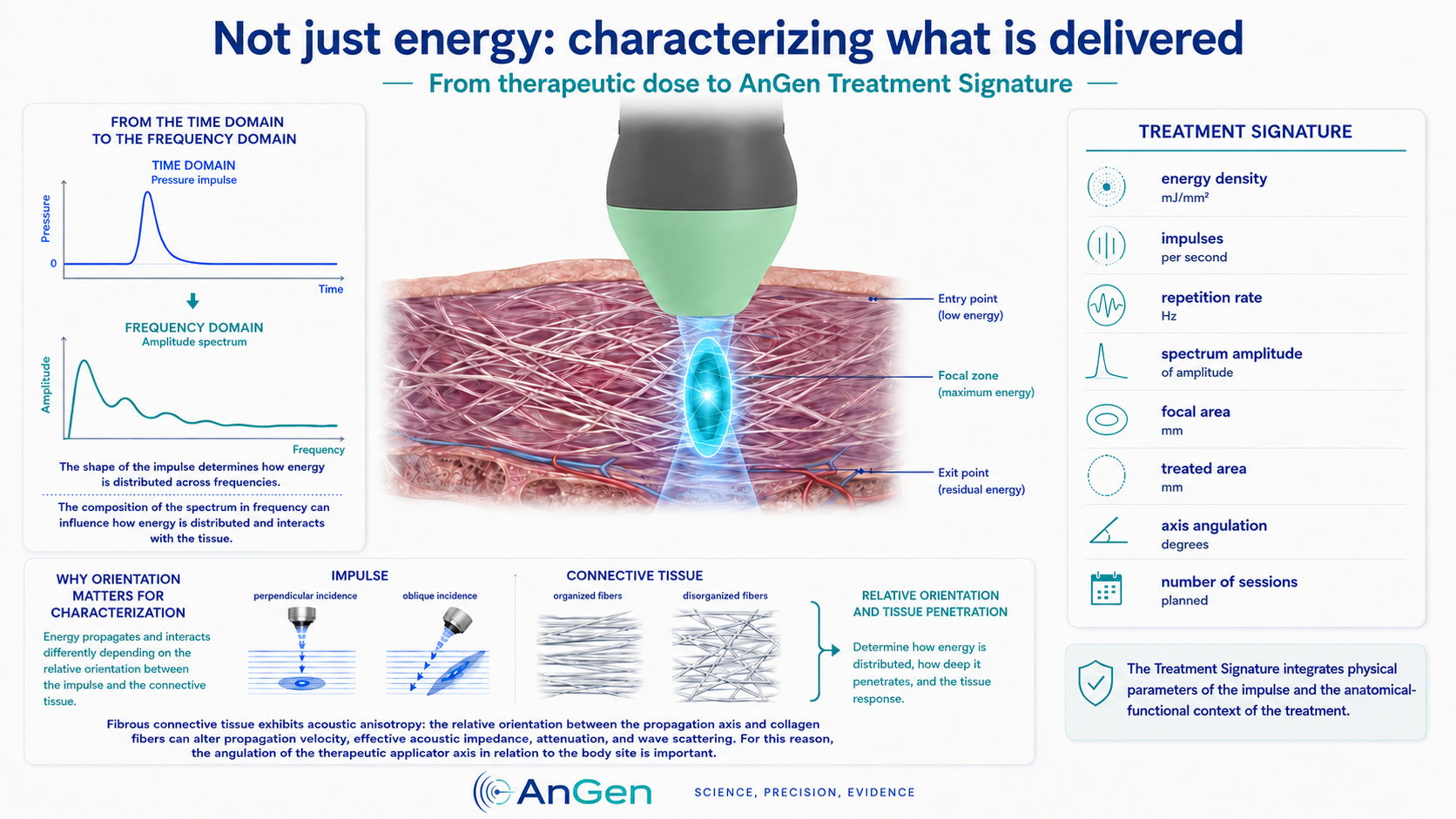
Not just energy. Treatment description also includes impulse characteristics, delivery geometry and the way the therapy is applied to the target tissue.
Proprietary electrohydraulic technology
The AnGen focused source uses electrohydraulic technology developed by BB Medical. Control of impulse generation provides the physical foundation for treatment characterisation.
Not just energy
Energy density alone does not completely describe the therapy. AnGen also considers impulses, release frequency, spectral composition, focal area, treated area and applicator-axis angulation.
AnGen Treatment Signature
The parameters of each session are collected and organised into a Treatment Signature, creating a structured and comparable record of the treatment delivered.
Physical, geometric and treatment parameters
A more complete description of therapy than energy density alone.
AnGen describes treatment through three dimensions: impulse characteristics, delivery geometry and session parameters.
One Treatment Signature describes one session. A sequence of Treatment Signatures describes the therapeutic pathway.
Structured recording of treatment sessions provides the foundation for progressively connecting treatment, baseline data, monitoring, follow-up and patient outcomes.
3. The AnGen care pathway for chronic conditions
AnGen proposes a care model that integrates device-based therapy, lifestyle support, monitoring and telemedicine within a continuous, personalised and patient-centred pathway.
The convergence of healthcare, technology and data can make the relationship between patients and healthcare professionals more continuous, linking what happens during treatment with what happens between visits.

The AnGen chronic care loop
A continuous pathway connecting therapy, lifestyle and technology
Medical history and assessment
- Clinical history
- Assessments and questionnaires
- Baseline parameters
- Definition of objectives
Online visits and digital support
- Scheduled teleconsultations
- Secure messaging
- Education and coaching
- Support between visits
Cloud-based clinical record
- Integrated and protected data
- Access for authorised care teams
- Longitudinal trends

Device-based therapy
- AnGen electrohydraulic ESWT
- Documented session parameters
- AnGen Treatment Signature
Lifestyle support
- Physical activity and exercise
- Nutrition and diet
- Sleep and recovery
- Stress management
Continuous monitoring and adherence
- Pathway adherence
- Selected physiological parameters
- Symptoms and quality of life
- Data through the Patient App
An integrated ecosystem
Data, technology and people can work together to identify changes earlier, maintain continuity of care and support better-informed clinical decisions.
PROFESSIONALS
AND DATA
SYSTEM
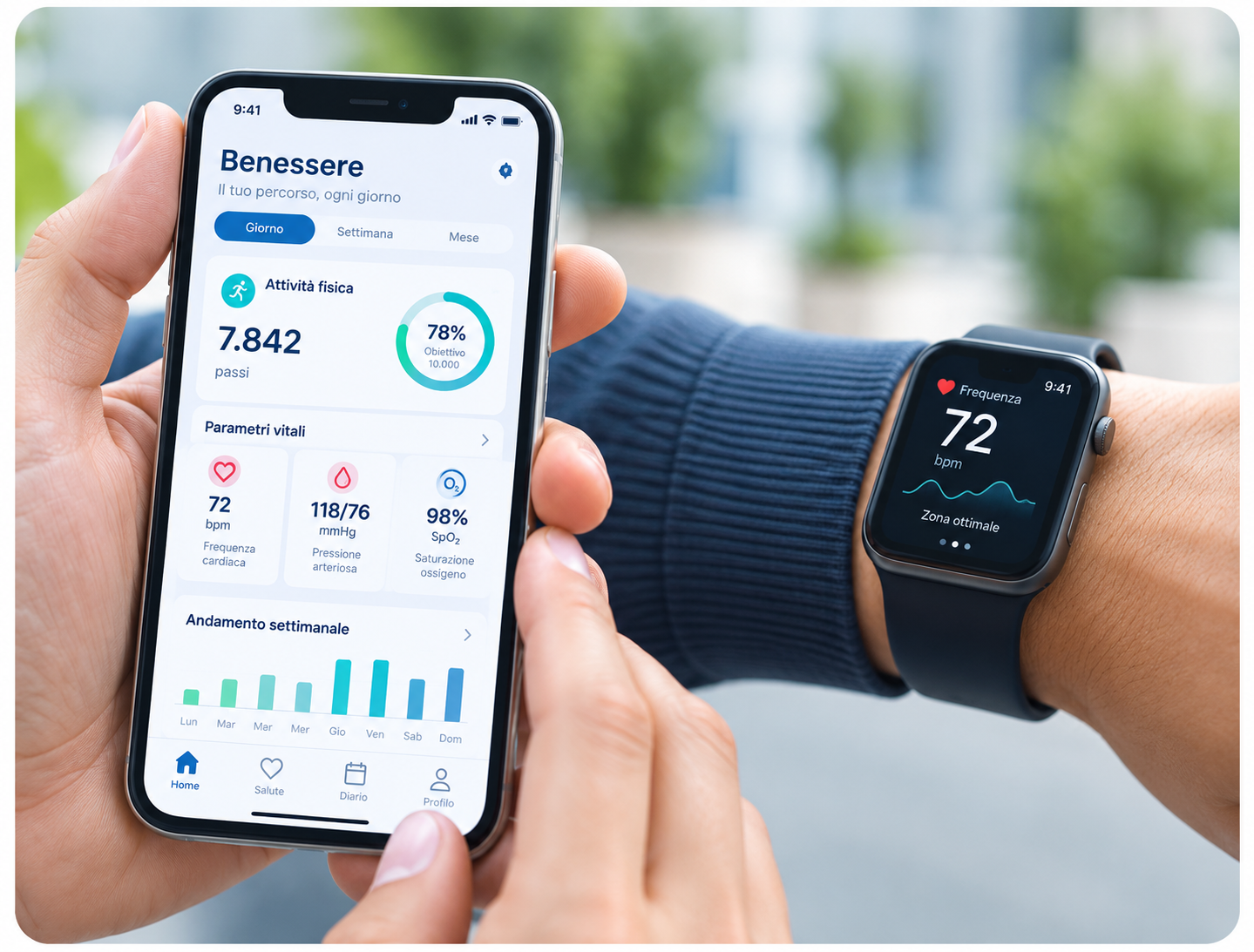
Data that create value
Longitudinal monitoring can help compare data over time, evaluate adherence and identify changes that may be useful when reviewing the care pathway.
A cloud-based clinical record can connect baseline, Treatment Signature, monitoring and follow-up, making relevant information available to authorised healthcare professionals.

Telemedicine and online support
Teleconsultations, digital communication and remote support can complement in-person visits and help maintain contact with the patient throughout the pathway.
Healthcare professionals remain responsible for interpreting the data and making clinical decisions.
Expected benefits of an integrated and personalised pathway
Support for better clinical outcomes
Longitudinal data and structured follow-up may support more personalised interventions.
Greater adherence
Reminders, monitoring and support may help maintain patient engagement.
More timely intervention
Relevant trends and changes can be brought to the attention of the care team.
Healthcare sustainability
Prevention, monitoring and continuity of care may contribute to more efficient use of resources.
Security and privacy
Controlled access, data protection and patient consent are key elements of the digital architecture.
Request further information about AnGen technology, Treatment Signature and the evolution of clinical pathways and monitoring.
Discover how AnGen integrates electrohydraulic ESWT technology, treatment characterization, monitoring and outcomes into a structured clinical pathway.